
What is Regenerative Agriculture?

Updated: Aug 24

What is ‘regenerative’ agriculture?
I get this question a lot when telling people where I work.
“You’re working for a farm now, Laura?”
“Yes, Deck Family Farm. Maybe you’ve seen them at the farmers market?” I say.
“Oh, maybe… I’m not sure.”
“It’s a regenerative farm in Junction City and we raise livestock,” I continue.
They make a puzzled look and ask something like, “Regenerative? What does that mean?”
If I had said it’s an organic farm, they would have no trouble understanding. And to be fair, there is no standardized set of regenerative practices, so it can feel squishy. But we think our regenerative methods exceed the organic standards, and so it’s worth exploring.
So what do I mean by “regenerative?”
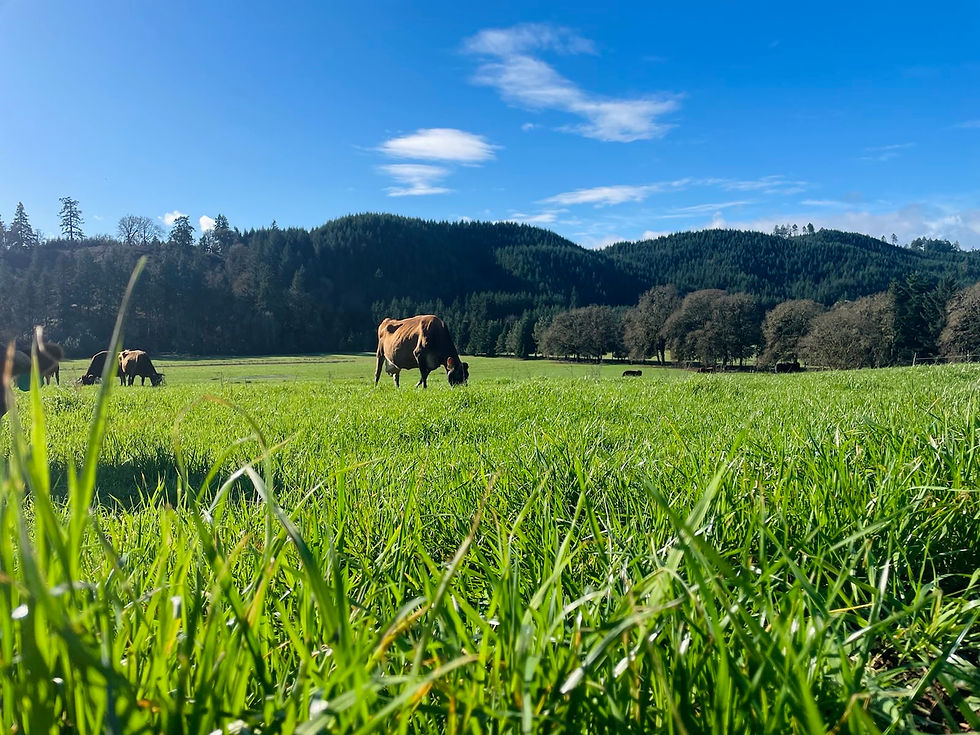
My favorite way of introducing the term is to say that the soil is our main client: We do everything with an eye toward improving the health of the soil.
Sounds altruistic, right? Well, it is actually quite self-interested if you understand how it benefits the animals and the environment we live in. These are among the values that make the hard work of farming worth it to us. Regenerative farmers don’t want to live on burnt-out land that needs chemical inputs and no longer supports the natural flora and fauna of our region.
As you’ll see in our blog, we value the presence of other species in these coast range hills. We love the challenge of fitting in with the native predators by protecting our vulnerable species with enclosures and guardian dogs, rather than exterminating the threat. We enjoy seeing the migrating birds have a home on our farm. We love being able to pick the wild fruit in our fields and eat it without worrying about pesticides or other chemicals.
And we know our customers also are eager to know that their food is produced ethically and naturally. We are all becoming more and more aware of the commodity market and the short cuts they have taken to bring cheap food to the cities. We are learning that cheap food comes with extensive (no longer hidden) costs: less nutrition, lack of transparency, animal cruelty and exploitative employment practices.
Regenerative farming is a technique that solves all these problems while also creating jobs and beautifying our region with more small farms. Shopping small and local supports the growth of this industry and we are so glad you are investigating this for yourself.
Below are some of the regenerative practices we use at Deck Family Farm, with links to blog posts about each one. Please consider coming to the farm for a tour to see for yourself!
Holistic Planned Grazing: Planning herd movements based on plant recovery times and seasonal weather changes. This means we have more natural forage for the animals to eat.
Adaptive Multi-Paddock (AMP) Grazing: Using portable fencing to keep dense herds in small areas for short periods. We do this with cattle, hogs, sheep and poultry. This allows the ungrazed areas time to repair and regenerate before putting the herds on them again.
Silvopasture: Integrating trees, forage plants, and livestock on the same parcel of land. This creates shade for the soil, and provides a natural environment for our animals and for the wild species we share the fields with.
Natural Fertilization: Relying entirely on animal manure and urine distributed across the landscape instead of synthetic inputs. Spreading this waste over the pasture lets the soil filter and absorb it naturally over time, rather than it running off directly into waterways — improving water retention, protecting creek health, and feeding a balanced soil microbiome with natural, unconcentrated nutrients.
Flock and Herd Integration: Running multiple species together or in sequence, like chickens following cattle. Deck has a years-long schedule for rotating species on our fields which maximizes the pest control and nutrient capture.
Deferred Grazing: We grow some fields for hay, fermenting it for winter feeding as baleage.
Natural Fertilization: Relying entirely on animal manure and urine distributed across the landscape instead of synthetic inputs. This practice creates nutrient-rich forage for the animals, improves water retention capabilities of the soil, benefits the creeks because the barn waste water is filtered and cleaned before rejoining the creeks, and benefits the soil microbiome because the nutrients are natural and balanced.
Protecting Waterways: We have fencing that keeps animals out of the creeks. This prevents heavy bodies from destroying the landscape, allows other creatures to live there, and keeps manure out of the water.
